
Reducing Office Cooling Costs with Smart Blind Choices Brisbane
Air conditioning dominates Brisbane office electricity bills. Solar heat through windows forces cooling systems to work harder. Proper blinds dramatically reduce heat gain and cooling costs. This guide explains how blind selection cuts energy expenses in Brisbane commercial buildings.
Related service: Office Blinds
How Windows Create Cooling Costs
Solar radiation through glass heats offices intensely. West-facing window in Brisbane summer admits enormous heat. The glass itself becomes hot and radiates heat inward. Air conditioning cannot keep up during peak heat.
Heat gain happens even through tinted glass. Standard window tinting helps but does not eliminate heat gain. Once solar radiation passes through glass, it becomes heat inside. This heat must then be removed by air conditioning.
Unshaded windows are single largest heat source in most offices. More significant than computers, lights, or people. Controlling window heat gain delivers biggest cooling cost reduction.
Peak heat coincides with peak electricity prices. Afternoon sun drives highest cooling demand. This matches expensive peak electricity period. Reducing afternoon cooling load saves disproportionately on electricity bills.
How Blinds Reduce Heat
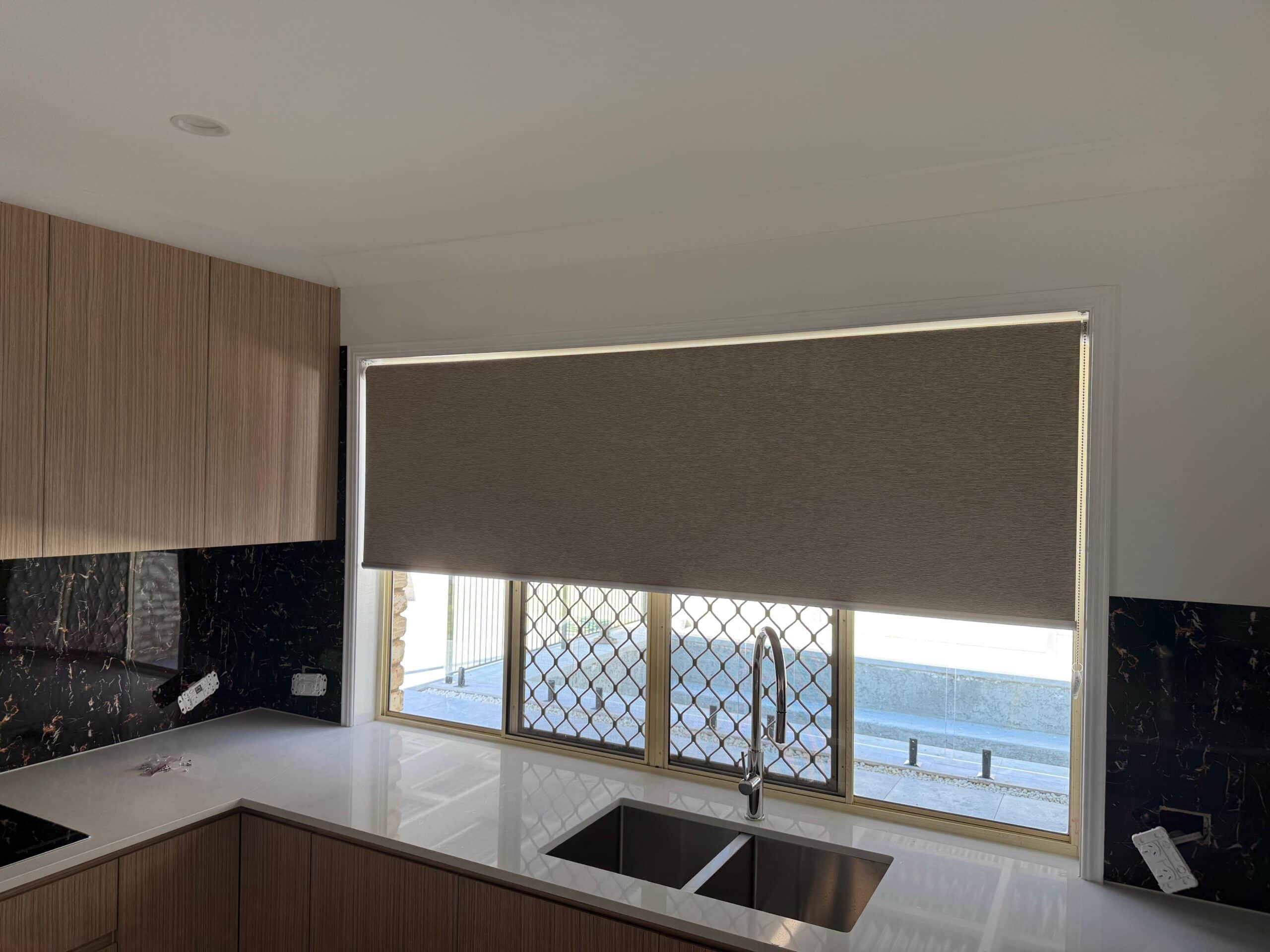
Reflection blocks heat before it enters. Light-coloured blinds reflect solar radiation back out window. This prevents heat gain entirely. Much more effective than absorbing and trying to dissipate heat.
Air gap between blind and glass creates insulation. Heat absorbed by blind radiates partly back outside. Convection in air gap reduces heat transfer. Properly fitted blinds with air gap work best.
Sunscreen fabrics balance light and heat. They admit diffused light while reflecting significant heat. Office stays brighter than with blockout blinds. Heat rejection is still substantial.
Blockout blinds provide maximum heat rejection. They reflect nearly all solar radiation. No light means no heat. Used strategically on worst windows, they deliver huge cooling savings.
Best Blind Choices for Cooling
White or very light-coloured blinds reflect maximum heat. This matters more than any other factor. Dark blinds absorb heat and fail to reduce cooling costs. Always choose light colours for heat control.
Reflective backing on roller blinds boosts performance. Aluminium or silver backing reflects more than plain fabric. Small cost increase delivers significant additional heat rejection.
Low openness factor sunscreen fabrics work well. One to three percent openness blocks heat effectively while maintaining views. Five percent openness is compromise between light and heat control.
External blinds provide best heat rejection. They stop heat before it reaches glass. Not always practical for multi-storey buildings but worth considering for ground floor. Heat rejection doubles compared to internal blinds.
- Light colours: Maximum reflection
- Reflective backing: Enhanced performance
- Low openness sunscreen: Good balance
- External blinds: Best heat rejection
Window-Specific Strategies
West-facing windows need absolute priority. Afternoon sun creates brutal heat. Use most effective heat-rejection blinds here. This is not place to compromise. The cooling savings justify premium blind investment.
North-facing windows need year-round heat control. Sun angle changes seasonally but heat gain is constant. Adjustable blinds let you optimise based on season. Venetians work well for this.
East-facing windows need morning heat control. Morning sun is lower angle but still significant. Blockout or low-openness sunscreen works well. Less critical than west side but still important.
South-facing windows contribute least heat. These can use higher-openness fabrics or even no blinds in some climates. In Brisbane, some heat control still beneficial but least priority.
Measuring Energy Savings
Heat rejection coefficient quantifies blind performance. Good sunscreen blinds reject sixty to eighty percent of solar heat. Blockout blinds reject ninety percent plus. This directly translates to cooling reduction.
Cooling load calculations show potential savings. Professional energy assessment quantifies expected savings for your specific building. This justifies blind investment with hard numbers.
Real-world savings depend on many factors. Building insulation, air conditioning efficiency, and occupancy patterns all matter. Typically expect twenty to forty percent cooling cost reduction from proper blinds.
Payback period for quality heat-control blinds is two to five years typically. After payback, savings continue for blind lifetime. Ten-year blind life means five to eight years of pure savings.
Automation Enhances Savings
Motorised blinds respond faster to conditions. Manual blinds rely on people remembering to close them. Automated blinds close when sun hits window. This captures full savings potential.
Sun sensors trigger blind closure automatically. East blinds close in morning. West blinds close in afternoon. North blinds adjust based on sun angle. This optimises heat control without staff input.
Building management system integration coordinates cooling and blinds. System knows when rooms are occupied. Blinds close in unoccupied rooms to reduce cooling load. Occupied rooms balance comfort and efficiency.
Automation pays for itself through additional savings. Capturing heat gain immediately prevents temperature rise. This reduces cooling system work. The efficiency improvement justifies automation cost.
Brisbane Climate Considerations
Brisbane summer is extremely challenging for cooling. November through March creates highest demand. Blinds must handle intense sustained heat. This is not mild climate where compromise works.
Winter still has heat gain on sunny days. Even June has warm afternoons. Year-round heat control delivers year-round savings. Not just summer problem in Brisbane.
Humidity affects comfort beyond temperature. Blinds reduce radiant heat that humidity makes worse. Cooler surfaces improve comfort even at same air temperature. This matters in humid Brisbane.
Storm season needs durable blinds. Savings mean nothing if storms destroy blinds regularly. Choose commercial-grade blinds that handle Brisbane weather. Durability and energy efficiency together.
Beyond Energy Savings
Employee comfort improves significantly. Reducing radiant heat makes offices more comfortable. Productivity increases. Staff satisfaction rises. These benefits add to financial savings.
Glare reduction improves computer work. Excessive brightness causes eye strain and headaches. Proper blinds maintain comfortable light levels. This enhances productivity measurably.
Air conditioning system life extends. Reduced workload means less wear. System may last years longer. Delayed replacement cost is significant additional saving.
Sustainability credentials improve. Lower energy use reduces carbon footprint. This matters for corporate environmental goals. Also appeals to environmentally conscious clients.
Common Questions
How much can blinds really save on cooling costs?
Twenty to forty percent reduction in cooling costs is typical with proper blind selection and use. Specific savings depend on building characteristics and existing blinds. Professional energy assessment provides accurate estimate for your building.
Do dark blinds look better but cost more to run?
Yes absolutely. Dark blinds absorb heat instead of reflecting it. They can increase cooling costs rather than reduce them. Light colours are essential for energy efficiency. Style must not compromise heat rejection.
Is automation worth the extra cost?
Yes for medium to large offices. Automation ensures blinds always operate optimally. Manual blinds depend on occupant behaviour which is inconsistent. Additional savings from automation pay for itself within blind lifetime.
When to Call a Professional
Energy-focused blind selection requires understanding heat dynamics and product specifications. Professionals quantify expected savings and recommend optimal solutions. Their expertise ensures you invest wisely in blinds that deliver promised energy reductions.
Atlas Blind & Curtain provides expert Office Blinds focused on energy efficiency across Brisbane, Ipswich, and Logan. We assess your building’s heat gain, recommend highest-performing heat-rejection blinds, and quantify expected cooling cost savings. Our solutions balance energy efficiency with practical operation and professional appearance.
Need Help in Brisbane, Ipswich or Logan?
Contact Atlas Blind & Curtain for expert blinds and curtains services across Brisbane, Ipswich and Logan.
Phone: 07 3195 2934
Address: 4/30 Kelliher Rd, Darra QLD 4076
Ready to move from research to a real quote? Atlas supplies and installs custom blinds Brisbane · browse the full range of custom curtains Brisbane — measured in your home, made to fit, installed by our own team. Book a free measure & quote or call 07 3195 2934.